
Physical Therapy Guide to Pes Anserine Bursitis
Pes anserine bursitis is a condition that produces pain on the inside of the knee and lower leg. It happens in people with knee osteoarthritis, in middle-aged women who are overweight, and in athletes. About 1 in 5 people with knee osteoarthritis also have pes anserine bursitis. It’s common in people with type 2 diabetes. Of the people with diabetes who have knee pain, about 24% to 34% of them have pes anserine bursitis. Physical therapists treat people with pes anserine bursitis by reducing pain, swelling, stiffness, and weakness. They also identify and treat the underlying cause of the condition.
Physical therapists are movement experts. They improve quality of life through hands-on care, patient education, and prescribed movement. You can contact a physical therapist directly for an evaluation. To find a physical therapist in your area, visit Find a PT.
What Is Pes Anserine Bursitis?
The pes anserine bursa is a small, fluid-filled sac located about 2 inches below the knee joint line on the inside of the lower leg. It lies beneath three tendons that attach the muscles of the thigh to the shinbone (tibia). The bursa acts as a cushion for these tendons. The term "bursitis" describes a condition where the bursa becomes irritated and inflamed. This condition is usually painful with swelling around the bursa. Certain positions, movements, or disease processes can increase friction or stress on the bursa, leading to bursitis.
Pes anserine bursitis can be caused by:
- Repetitive activities, like squatting, stair climbing, and side-to-side movement
- Sports training mistakes, such as a lack of stretching, sudden increases in running distance, or too much uphill running
- Obesity
- Osteoarthritis of the knee
- Misalignment of the knee, like knock-kneed or bow-legged posture
- Turning the leg sharply, with the foot planted on the ground
- Injury, such as a direct hit to the leg
- Tight hamstring (back of the thigh) muscles
- A tear to the medial collateral ligament, or MCL, of the knee
- Flat feet or bunions
How Does It Feel?
With pes anserine bursitis, you may experience:
- Pain and swelling in the region on the inner (medial) side of the knee. This pain may also extend to the front of the knee and down the lower leg.
- Pain when touching the inside of the lower leg, about 2 inches below the knee joint line.
- Pain when bending or moving your knee straight.
- Pain or difficulty walking, sitting down, rising from a chair, or climbing stairs.
How Is It Diagnosed?
Your physical therapist will conduct a thorough examination, including taking your medical history and asking you detailed questions about your injury. A physical therapy examination may include looking at your posture, movement, flexibility, strength, balance, and how you perform tasks, such as stair climbing.
Your physical therapist will also perform special tests to help determine the likelihood of pes anserine bursitis. Your therapist may:
- Gently press on the inner side of your knee to see if it is painful to touch.
- Assess the range of motion you have at the knee, hip, and ankle.
- Assess the strength of your leg muscles.
- Observe how you walk, squat, and perform other functional and sports-specific tasks.
Your physical therapist may collaborate with an orthopedic physician or other health care provider to confirm the diagnosis. Your doctor may order further tests, such as an MRI, to confirm the diagnosis and to rule out other damage to the knee.
How Can a Physical Therapist Help?
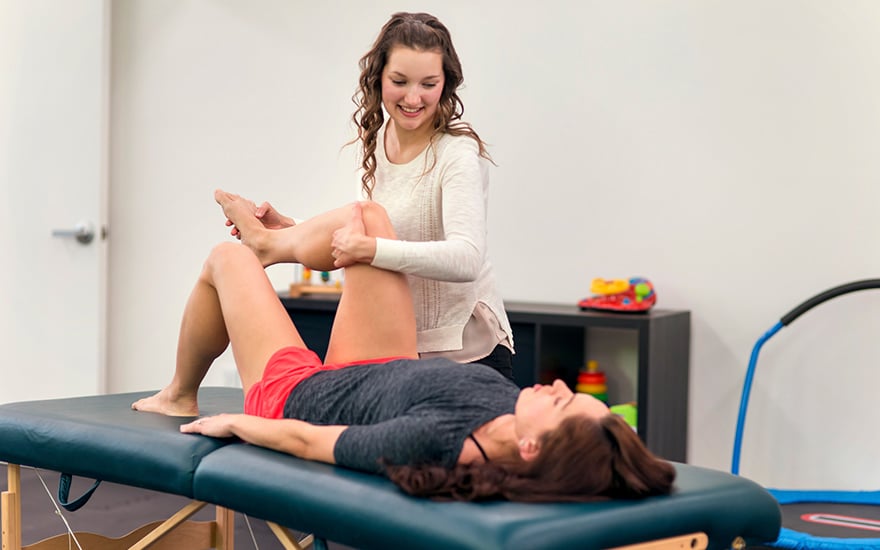
Your physical therapist will work with you to design a specific treatment program for your recovery. Physical therapy will help reduce your pain and improve your mobility so you can return to your normal lifestyle and activities.
Your physical therapy plan will be personalized to you based on the results of your evaluation and your treatment goals. Your physical therapy program may include treatment to:
Reduce pain and swelling. Your physical therapist will provide treatments to control and reduce your pain and swelling. This may include ice, heat, ultrasound, electrical stimulation, taping, exercises, and hands-on therapy.
Improve motion. Your physical therapist will choose specific activities and treatments to help restore normal movement in the knee and leg. This may include joint mobilization and range-of-motion exercises.
Improve flexibility. Pes anserine bursitis is often related to tight hamstring (back of the thigh) muscles. Your physical therapist will determine if your hamstring muscles or any other leg muscles are tight and teach you how to stretch them.
Improve strength. Certain exercises will aid healing at each stage of recovery. Your physical therapist will teach you exercises to steadily restore the health of your tendons and increase your muscle strength and power. These may include using cuff weights, stretch bands, weight-lifting equipment, and cardio-exercise equipment, such as treadmills or stationary bicycles.
Improve balance. When your joints hurt, your balance reactions — the quick, automatic movements your body uses to keep from falling — don’t work as well. Regaining this sense of balance is important after an injury. Your physical therapist may teach you exercises to improve your balance skills.
Speed recovery time. Your physical therapist knows how to choose the right treatments and exercises to help you heal faster than you can on your own. They work with you toward your goals and help you get back to the activities that matter to you.
Return to activities. At first, your physical therapist may ask you to stop or change activities that make your pain worse so your body has time to heal. They will talk with you about your goals and create a treatment plan to help you reach them in the safest and fastest way possible. You might learn special exercises, ways to move better at work, or sports drills that help you reach your personal goals.
Can This Injury or Condition Be Prevented?
An annual physical therapy examination can help you avoid pes anserine bursitis. A physical therapist will identify movement patterns, stiffness, or weakness that may contribute to this injury. These visits help you learn how to take care of your body. Your physical therapist can recommend a home exercise program to strengthen and stretch your muscles to help prevent the onset of pes anserine bursitis. These may include strength and flexibility exercises for the legs, knees, and core muscles.
To help prevent the recurrence of the injury or prevent its onset, your physical therapist may also advise you to:
- Learn about your leg alignment and how to safeguard your legs.
- Learn correct knee positioning when participating in athletic activities.
- Follow a consistent flexibility and strengthening exercise program, especially for your core, leg, and hip muscles.
- Practice balance and agility exercises and drills.
- Warm up before starting a sport or heavy physical activity.
- Avoid sudden increases in running mileage or uphill running.
- Wear shoes that are in good condition and fit well.
- Maintain a healthy weight.
- Treat and manage diabetes very closely.
- Wear shoes or inserts that reduce flat feet and valgus (knock-knee) positioning of the lower extremities.
- Wear a knee brace to support the knee and reduce strain on the inside of the joint.
What Kind of Physical Therapist Do I Need?
All physical therapists are prepared through education and experience to treat pes anserine bursitis. However, you may want to consider:
- A physical therapist who is experienced in treating people with orthopedic injuries. Some physical therapists have a practice with an orthopedic focus.
- A physical therapist who is a board-certified clinical specialist or who has completed a residency or fellowship in orthopedic or sports physical therapy. This physical therapist has advanced knowledge, experience, and skills that may apply to your condition.
You can find physical therapists who have these and other credentials by using Find a PT, the online tool built by the American Physical Therapy Association to help you search for physical therapists with specific clinical expertise in your geographic area.
General tips when you're looking for a physical therapist (or any other health care provider):
- Get recommendations from family and friends or from other health care providers.
- When you contact a physical therapy clinic for an appointment, ask about the physical therapists' experience in helping people who have your type of injury.
- Be prepared to describe your symptoms in as much detail as possible, and say what makes your symptoms worse.
The American Physical Therapy Association believes that consumers should have access to information that can help them make health care decisions and prepare for a visit with their health care provider.
The following articles provide some of the best scientific evidence related to physical therapy treatment of pes anserine bursitis. The articles report on recent research and provide an overview of the standards of practice in the United States and internationally. The article titles are linked either to a PubMed* abstract of the article or to free full text, so that you can read it or print out a copy to bring with you to your health care provider.
Liang YF, Li XS, Zha FD, et al. Association between knee osteoarthritis and foot deformities: epidemiological analysis of hallux valgus and flatfoot. Ann Med. 2025;57(1):2536213. Article Summary in PubMed
Mohseni M, Mabrouk A, Li D. Pes Anserine Bursitis. In: StatPearls [Internet]. StatPearls Publishing; 2025. Article Summary in PubMed
Aicale R, Pellegrina R, Angelo DI, et al. Comprehensive review of pes anserine syndrome: etiology, diagnosis, and management. Eur J Musculoskel Dis. 2024;13(3):60–69. Free article
Sekkat A, Chaouche I, Alami Bassim G, et al. Pes anserine bursitis as a complication of tibial osteochondroma. Radiol Case Rep. 2024;19(9):3752–3756. Article Summary on PubMed
Abicalaf CARP, Nakada LN, Dos Santos FRA, et al. Ultrasonography findings in knee osteoarthritis: a prospective observational cross-sectional study of 100 patients. Sci Rep. 2021;11(1):16589. Article Summary on PubMed
Uysal F, Akbal A, Gökmen F, et al. Prevalence of pes anserine bursitis in symptomatic osteoarthritis patients: an ultrasonographic prospective study. Clin Rheumatol. 2015;34(3):529–533. Article Summary in PubMed
Chatra PS. Bursae around the knee joints. Indian J Radiol Imaging. 2012;22(1):27–30. Article Summary in PubMed
Helfenstein M Jr, Kuromoto J. Anserine syndrome [article in English and Portuguese]. Rev Bras Reumatol. 2010;50(3):313–327. Article Summary in PubMed
Alvarez-Nemegyei J. Risk factors for pes anserinus tendinitis/bursitis syndrome: a case control study. J Clin Rheumatol. 2007;13(2):63–65. Article Summary in PubMed
*PubMed is a free online resource created by the National Center for Biotechnology Information. It contains millions of citations to biomedical literature, including those in the National Library of Medicine's MEDLINE database.
Expert Review:
Oct 27, 2025
Revised:
Oct 27, 2025
Content Type: Guide
Pes Anserine Bursitis
PT, DPT
Makenzie Mazin
PT, DScPT