
Physical Therapy Guide to Slipped Capital Femoral Epiphysis
Slipped capital femoral epiphysis, or SCFE, is one of the most common hip disorders in adolescents ages 12 to 16 years. It causes pain and limping, and affects one in every 10,000 adolescents in the United States. SCFE occurs 1.5 to 2 times more often in males than in females. In 20%-40% of cases, it affects both hips (bilateral). Bilateral SCFE is seen more often in children of younger age. The exact cause of SCFE is unknown. However, puberty, body mass and obesity, trauma, growth spurts, or other factors may contribute. The use of growth hormone, commonly used to treat diseases of growth hormone deficiency, may predispose children to several pediatric conditions, including SCFE. A physical therapist can help recognize early signs of SCFE in a child with a limp or hip pain. Physical therapists treat SCFE by helping children maintain strength, joint motion, and hip stability before or after other medical treatments. A physical therapist also can design a program to help prevent arthritis from developing in the affected hip.
Physical therapists are movement experts. They improve quality of life through hands-on care, patient education, and prescribed movement. You can contact a physical therapist directly for an evaluation. To find a physical therapist in your area, visit Find a PT.
What Is Slipped Capital Femoral Epiphysis?
Slipped capital femoral epiphysis is a hip problem that causes pain and trouble walking in children. It involves the long bone of the thigh (femur), the ball of the hip joint (the head of the femur), and the nearby growth plate (area of a bone where new bone forms). Growth plates are made of cartilage, which is weaker than bone. SCFE happens when the head of the femur slips along the growth plate. SCFE can occur in one hip or both hips.
How Does It Feel?
Symptoms of SCFE may include:
- Limping and trouble walking
- Pain in the hip, groin, thigh, or around the knee
- Decreased range of motion and movement in the hip and knee
Severe cases may result in:
- The affected leg appearing to turn outward
- Pain when bearing weight on the leg or being unable to bear weight on the leg
- An overall loss of function, including the ability to walk and move easily due to limited motion and pain.
The most common symptom of SCFE is limping. A child with SCFE often feels pain around the hip, groin, upper thigh, or inner knee. The child will find it easier to move their hip and leg when pointing the foot outward. This rotates the hip into a more comfortable position. Hip motion is limited and painful when the leg is turned and the foot points inward. There is also muscle weakness around the affected hip.
As slippage worsens, inflammation and pain occur. Everyday activities may become harder. A child may refuse to put weight on the affected leg due to pain. Not using the hip joint properly can lead to weakness in the hip and leg muscles and reduced flexibility. In some cases, one leg may appear shorter than the other.
Children with SCFE are typically male, ages 10 to 16 years, during a growth spurt. The disorder usually begins in just one hip. Later, slippage may occur in the other hip, even if the child has received treatment for the first hip.
A child's symptoms may disappear for periods of two to three weeks. This pattern of pain and limping followed by no symptoms may create doubt that a problem exists. This may cause the family to dismiss the urgency of the initial symptoms. Children with SCFE symptoms should see a health care provider as soon as possible.
How Is It Diagnosed?
Physicians are often the first to diagnose SCFE. If a physical therapist is the first to observe symptoms, they will refer your child to an orthopedic specialist for diagnosis. Medical doctors diagnose SCFE based on symptoms, watching the child walk, a physical exam, and imaging tests. SCFE usually shows up on X-rays, but your child’s doctor may order an MRI or CT scan to confirm it. Imaging also allows a precise measurement of how much the bone has slipped and helps identify whether the hip is at risk of slipping further. In rare cases, the cartilage in the hip joint may break down, leading to long-term loss of motion. Early diagnosis is linked to better outcomes. Delayed diagnosis may increase the risk of related problems. Some cases of SCFE are harder to diagnose if symptoms are unclear or don’t follow the typical pattern. Children who present primarily with knee pain may get diagnosed later.
Physicians will grade the severity of the slip and joint deformity as follows:
- Grade 1: Pre-slip (no displacement of the head of the femur).
- Grade 2: Mild slip (up to one-third displacement).
- Grade 3: Moderate slip (one-third to one-half displacement).
- Grade 4: Severe slip (the head of the femur has slipped more than halfway down the growth plate).
There are two categories of SCFE:
- Category 1: A stable condition that involves a mild slip of the femoral head (the ball part of the upper thigh bone). With category 1, a child is usually able to walk or use crutches for longer distances. They may have pain and stiffness in the affected leg and walk with a limp. Rest often relieves pain, but it returns with activity.
- Category 2: A significant downward slip of the femoral head that creates an unstable and serious condition. A child with category 2 needs immediate treatment to protect the tissues around the hip joint. Because the hip is unstable, the child is unable to walk. The child likely will refuse to put weight on the affected leg, even when offered crutches or a walker. Symptoms of unstable SCFE are an emergency.
Early diagnosis may reduce the severity of slippage and enable your health care team to select the best treatments for the best possible outcomes.
How Can a Physical Therapist Help?
The hip is the body's strongest and most stable joint. Any serious issue in the hip should be examined as soon as possible. A physical therapist may be the first health care provider to identify the symptoms of SCFE or rule out other hip problems. If you see a physical therapist first, they will refer you to a physician for more diagnostic tests. In serious cases, physical therapists treat children with SCFE before and after surgery.
Evaluation is very important for guiding the treatment of SCFE. Your physical therapist will conduct a thorough assessment that includes:
- Taking a health history.
- Discussing the child's pain symptoms in detail.
- Detecting risk factors related to the condition.
- Reviewing lab tests and X-rays or other images.
- Observing the child's walking ability and movement function.
- Conducting a hands-on physical assessment.
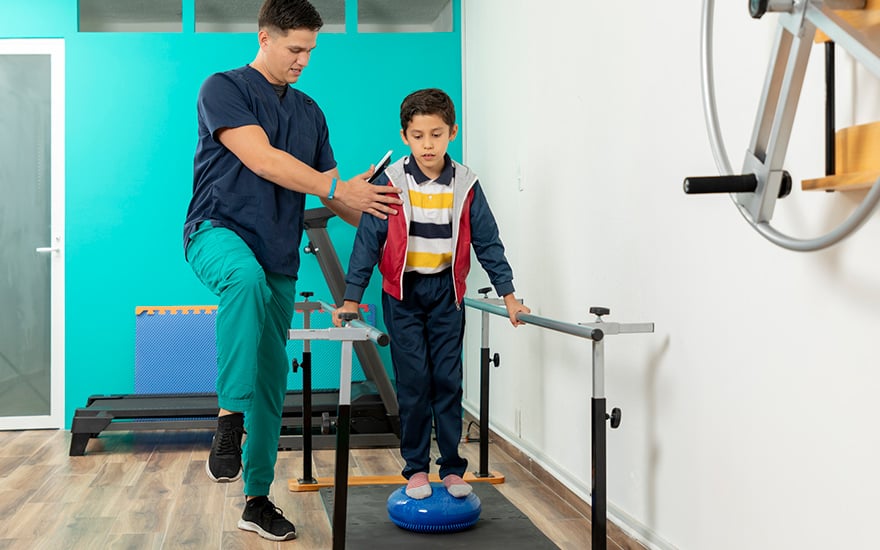
Physical therapists work with children and their families to create a treatment plan tailored to their needs and help them return to full activity. They help to ensure your child can do daily activities safely and may recommend temporary changes in activities to protect the hip.
The goals of physical therapy for SCFE are to reduce pain and prevent future arthritis. Physical therapy will focus on keeping the top of the femur (thigh bone) stable while maintaining and regaining joint mobility and leg strength. Surgery may be needed to stop the bone from slipping further. Physical therapy will focus on reducing pain, increasing range of motion, increasing strength, and improving your child’s ability to move and get around in their environment before and after the surgery.
Treatment Following Surgery
The most common type of surgery is called screw fixation. It uses hardware to secure the head of the femur to the main femur bone through the growth plate. After surgery, the orthopedic surgeon will provide recovery and treatment guidelines. Physical therapy after surgery begins with:
- Reducing joint and soft tissue inflammation
- Managing pain
- Assisting muscle activation and leg movement
As healing progresses, physical therapy involves:
- Strengthening exercises
- Increasing range of motion
- Helping the child increase their mobility
- Introducing functional activities, participation, and age-appropriate play in the final stages of recovery
Before and after surgery, a child may need to use crutches to protect their hip. A child who needs more support may use a walker before progressing to crutches or a cane. Your physical therapist will teach your child how to use any needed walking aid safely. Physical therapists help children with SCFE return to pain-free walking, running, and other fun activities. A recent research study showed that physical therapy after surgery reduced pain and improved range of motion and hip function.
Can This Injury or Condition Be Prevented?
There is no sure way to prevent SCFE. However, there are several known risk factors, including:
- Obesity (due to increased weight and pressure on the growth plate)
- A family history of SCFE
- A history of SCFE on one hip
- Male gender
- African American or Pacific Islander ancestry
- Endocrine (hormone) disorders, such as thyroid issues, diabetes, or growth hormone imbalances
Children can reduce the chances of developing SCFE by keeping a healthy weight, especially during the teen years. A healthy diet and regular physical activity are important throughout development for all children and adolescents. Studies show that children who lose weight after having SCFE in one hip greatly reduce their risk of developing it in the other hip. Correcting any diagnosed hormone or metabolism issues (problems with the way the body turns food into energy) also may help with prevention. There is debate over whether surgery to stabilize the unaffected hip is the best way to prevent SCFE on the opposite side once it has occurred in one hip. You may consult a physician or physical therapist for guidance to reduce your child's chances of developing SCFE. Early diagnosis and treatment are the best ways to promote long-term muscle and bone health.
What Kind of Physical Therapist Do I Need?
All physical therapists are prepared through education and experience to treat patients with SCFE. However, you may want to consider the following:
- A physical therapist who is experienced in pediatrics, developmental disorders, and orthopedics. A pediatric physical therapist may work with you and your child in the clinic, home, school, or community environment.
- A physical therapist who is a board-certified clinical specialist or who has completed a residency or fellowship in pediatric or orthopedic physical therapy. This physical therapist has advanced knowledge, experience, and skills that may apply to SCFE.
- An experienced pediatric physical therapist who also understands the importance of working with other health care providers to maximize outcomes for children with SCFE.
- A physical therapist who focuses on treating children with developmental orthopedic disorders.
You can find physical therapists in your area with these credentials and clinical expertise on Find a PT, a tool built by the American Physical Therapy Association.
General tips when you're looking for a physical therapist (or any other health care provider):
- Get recommendations from family, friends, or other health care providers.
- Ask about the physical therapists' experience in helping children with developmental disorders or orthopedic problems when you contact a physical therapy clinic or home health agency for an appointment.
- Be prepared to describe your child's symptoms and motor skills in as much detail as possible and discuss your and your child’s goals during your first visit.
The APTA Academy of Pediatric Physical Therapy contributed to this consumer resource. It is for informational purposes only and is not intended to represent the position of APTA Pediatrics.
The American Physical Therapy Association believes consumers should have easy access to clear, reliable information that helps them make informed health care decisions and feel prepared for visits with their providers.
These resources offer the latest scientific evidence on the physical therapy treatment of SCFE. They cover recent research and standards of practice in the United States and globally. Whenever possible, they link to PubMed* abstracts (some of which offer free full-text access) or to other resources. Read these materials to learn more or share them with your health care provider.
Lawand JJ, Momtaz D, Remer HB, Peterson B, Ehlen QT, Ghali A, Hosseinzadeh P. Differential risk profiles for slipped capital femoral epiphysis in pediatric patients: A comparative analysis of normal and elevated BMI groups. J Am Acad Orthop Surg. 2025 Jun 15;33(12):685–691. Article Summary on PubMed.
Jones K, Mabrouk A, Tavarez M. Slipped capital femoral epiphysis (updated 2023 Jul 25). In: StatPearls [Internet]. Treasure Island, FL: StatPearls Publishing; 2025 Jan–. Available from: https://www.ncbi.nlm.nih.gov/books/NBK538302
Bouchard MD, Vescio BG, Munir M, Gilbert J, de Souza RJ, Kay J, de Sa D, Wahi G. The epidemiology of slipped capital femoral epiphysis in children and adolescents: A systematic review of risk factors and incidence across populations. JBJS Rev. 2025 May 22;13(5). Article Summary on PubMed.
Negru M, Catan L, Amaricai E, Lazarescu AE, Rezumes M, Stanciulescu CM, Boia ES, Calin Popoiu M. The role of physical exercise in the rehabilitation of children with surgically treated unilateral slipped capital femoral epiphysis. Balneo PRM Res J. 2025;16(1):1–13. Free article.
Mittal M, Momtaz D, Gonuguntla R, Singh A, Dave D, Mohseni M, Torres-Izquierdo B, Schaibley C, Hosseinzadeh P. The effect of human growth hormone treatment on the development of slipped capital femoral epiphysis: A cohort analysis with six years of follow-up. J Pediatr Orthop. 2024 Apr 1;44(4):e344–e350. Article Summary on PubMed.
Momtaz D, Mirghaderi P, Gonuguntla R, Singh A, Mittal M, Burbano A, Hosseinzadeh P. Rate and risk factors for contralateral slippage in adolescents treated for slipped capital femoral epiphysis: A comprehensive analysis of 3,528 cases. J Bone Joint Surg Am. 2024 Mar 20;106(6):517–524. Article Summary on PubMed.
Miles DT, Wilson AW, Scull MS, Moses W, Quigley RS. A new look at the epidemiology of slipped capital femoral epiphysis: A topic revisited. J Pediatr Soc North Am. 2024 Feb 5;5(4):705. Article Summary on PubMed.
Zverev S, Tenner ZM, Coladonato C, Lazar-Antman M. The rising popularity of growth hormone therapy and ensuing orthopedic complications in the pediatric population: A review. Children (Basel). 2024 Nov 7;11(11):1354. Article Summary on PubMed.
Singh A, Kotzur T, Torres-Izquierdo B, Momtaz D, Gonuguntla R, Hoveidaei AH, Seifi A, Galán-Olleros M, Hosseinzadeh P. Decade-long trends in incidence of slipped capital femoral epiphysis in the United States: A nationwide database analysis of more than 33 million patients. J Am Acad Orthop Surg Glob Res Rev. 2024 May 22;8(5):e24.00112. Article Summary on PubMed.
Pavone V, Testa G, Torrisi P, McCracken KL, Caldaci A, Vescio A, Sapienza M. Diagnosis of slipped capital femoral epiphysis: How to stay out of trouble? Children (Basel). 2023 Apr 25;10(5):778. Article Summary on PubMed.
Manglunia A, Goyal R, Behera HB, Mangaraj S. Hypothyroidism presenting as slipped capital femoral epiphysis. J Paediatr Child Health. 2022;58:737–738. Article Summary on PubMed.
Rosen M, Wong A, Worts P, Hutchinson H, Harmon K. Slipped capital femoral epiphysis in an adult with panhypopituitarism: A case report. JBJS Case Connect. 2021 Jul 30;11(3). Article Summary on PubMed.
Galletta C, Aprato A, Giachino M, Marrè Brunenghi G, Boero S, Turchetto L, Masse A. Hip morphology in slipped capital femoral epiphysis. J Pediatr Orthop B. 2021;30:535–539. Article Summary on PubMed.
*PubMed is a free public website run by the National Library of Medicine. It allows people to access summaries and references from health research articles published in scientific journals, including those indexed in the MEDLINE database.
Expert Review:
Oct 31, 2025
Revised:
Oct 31, 2025
Content Type: Guide
Slipped Capital Femoral Epiphysis
PT, DPT, MPT, certified in neuro-development treatment
PT, PhD, board-certified clinical specialist in pediatric physical therapy
Yasser Salem
PT, PhD, MS, board-certified clinical specialist in pediatric physical therapy and neurologic physical therapy