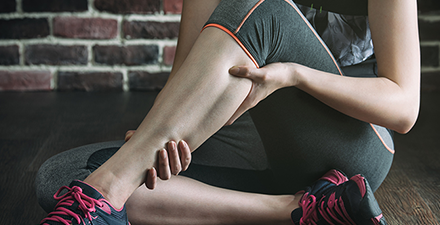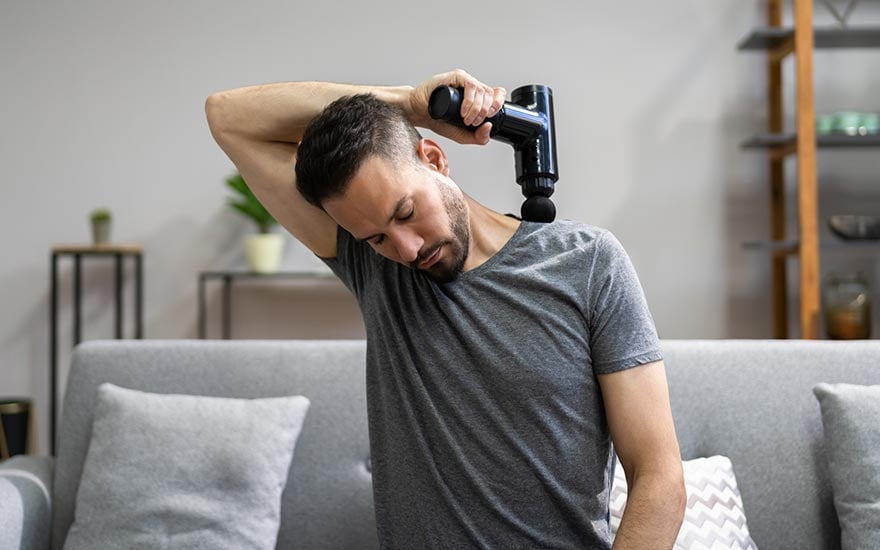
After a tough workout, a long day at your desk, or a stressful week, your muscles may feel tight, sore, or stiff. Used correctly, a massage gun may temporarily relieve these symptoms and help you move more comfortably.
Healthy muscles tighten and relax to support movement, maintain posture, and help your body handle the physical demands of everyday life. After exercise, repetitive activities, or long periods in one position, muscles can feel uncomfortable and may not move as freely. The rapid pulses from a massage gun may help increase blood flow and help muscles feel less sore or stiff for a short time. This may make movement feel easier.
Researchers are still studying how massage guns affect the body. Current evidence suggests they may reduce feelings of muscle discomfort. The effects are generally temporary. While many people find them helpful for comfort and recovery, massage guns are best used to support movement and wellness rather than to treat a medical condition.
Different massage guns offer different types of stimulation. Understanding these features can help you choose a device that meets your needs.
- Percussion uses quick, repeated pulses. Many people use it before or after an activity to help their muscles feel less stiff and move with more comfort.
- Vibration provides gentler stimulation and may promote relaxation and stress relief.
Many massage guns offer percussion, vibration, or both, allowing you to choose the setting that feels best for your goals.
When to Use a Massage Gun
A massage gun can be used:
- Before exercise or activity to help muscles feel ready to move
- After activity to temporarily relieve soreness or stiffness
- Throughout the day, when muscles feel tense
Regardless of when you use it, a massage gun works best as one part of an overall wellness and recovery plan that includes regular exercise, adequate sleep and hydration, and proper nutrition.
A Note on Safety
A massage gun is not right for everyone. Talk with your healthcare provider before using one if you:
- Have a blood-clotting disorder or take blood-thinning medication
- Have a recent fracture, surgery, or significant injury
- Have osteoporosis or fragile bones
- Have significant numbness or loss of sensation in the area you plan to treat
- Are pregnant and are unsure whether a specific area is safe to treat
- Have an active infection, open wound, or skin condition in the area you plan to treat
Stop using the device if it increases your pain or causes unusual symptoms.
Tips on Using a Massage Gun
This generalized advice can help you get the most out of using a massage gun:
- Start with the lowest setting.
- Focus on larger muscles, such as your calves, thighs, buttocks, back, and shoulders.
- Hold the device against the muscle and let the massage gun do the work. Applying extra pressure is usually not necessary.
- Move the massage gun slowly up and down the length of a muscle.
- Limit the time you use a massage gun on any one muscle to 2 to 3 minutes.
- If one area feels especially tight or sore, you can pause briefly (up to 10 to 30 seconds) before continuing to move along the muscle.
- Don’t use the massage gun on a bone, like your kneecap.
- Avoid areas where joints bend, such as the front of your elbow, front of your hip, and back of your knee. These areas contain important nerves and blood vessels that can be irritated. Also, avoid using a massage gun on the front of your neck. A physical therapist can show you how to safely work the muscles around these areas.
- Gentle stretching after using a massage gun may help you feel more relaxed and move more comfortably.
- If you feel pain or tingling while using the device, especially if it spreads beyond the area being treated, stop treating that spot and move to a different area.
While using a massage gun may help temporarily reduce muscle soreness and tension, it does not treat injuries or address the underlying cause of ongoing pain. Muscle soreness after activity is common, but severe pain, worsening pain, or pain accompanied by swelling, weakness, or loss of function should be evaluated by a healthcare professional.
How Can a Physical Therapist Help?
If muscle tightness, soreness, or tension keeps coming back, a physical therapist can help identify why.
A physical therapist will evaluate how you move, your strength, flexibility, and daily activities. This can help to identify factors that may be contributing to any recurring discomfort. They can also determine whether a massage gun is appropriate for you and show you how to use it safely for your specific concerns.
Your physical therapist may also recommend:
- Strengthening exercises to support your muscles and joints
- Stretching exercises to improve flexibility
- Tips on body mechanics for work, exercise, and daily activities
- Activity modifications to reduce strain on irritated muscles
- Hands-on treatment to improve comfort and movement
These strategies can help address the causes of recurring muscle tension instead of simply providing temporary relief.
Physical therapists are movement experts who personalize treatment to each individual. They help people reduce pain, improve mobility and function, and stay active through hands-on care, education, and tailored exercises. They also help prevent injuries and support long-term health and independence. You can see a physical therapist directly without a physician referral.* The Find a PT directory can help you locate a physical therapist near you.
*Certain insurance plans may still require a referral. Some states may limit the type or duration of treatment without one.