Most people want to stay active, independent, and healthy as they age. But new survey findings published by the Associated Press suggest many Americans aren't connecting everyday movement with their future health. The 2026 survey conducted on behalf of the American Physical Therapy Association, found that many adults reported experiencing pain, mobility challenges, sleep issues, or pelvic health concerns. Yet relatively few said they would seek help from a physical therapist when these issues begin to affect them. Physical therapists are movement experts who can help address these concerns early, before they have a bigger impact on daily life.
What the Survey Revealed
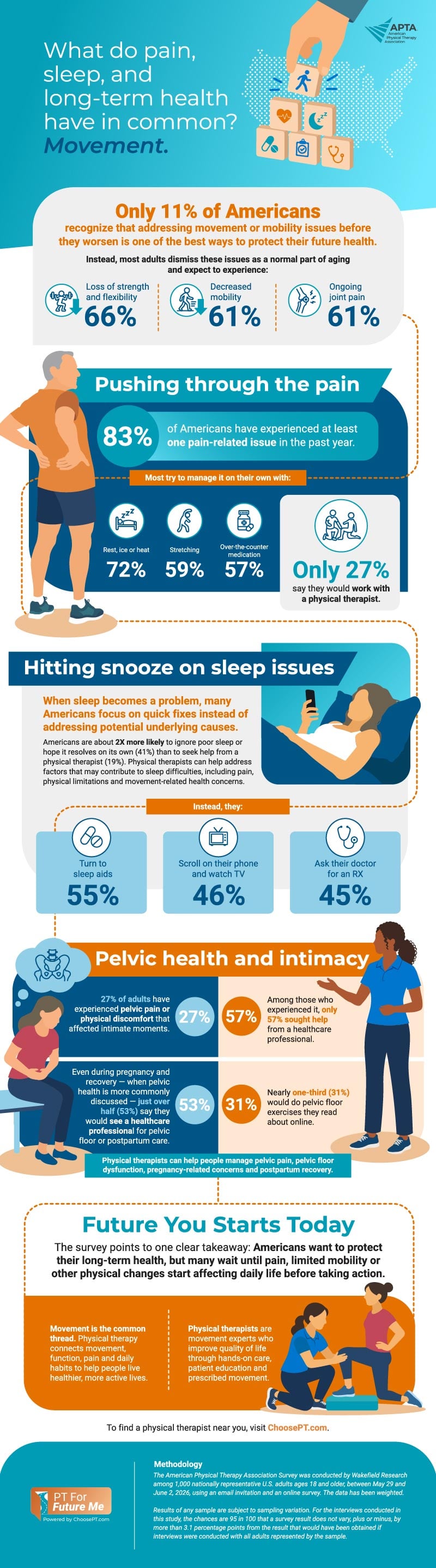
A national survey of U.S. adults found that only 11% of Americans recognize that addressing movement and mobility issues before they become serious is one of the best ways to protect their future health. Many adults expect declines in strength, flexibility, mobility, and comfort as a normal part of aging.
The findings also showed that:
- 83% of adults experienced at least one pain-related issue in the past year.
- Most people tried to manage pain on their own through rest, ice, heat, stretching, or over-the-counter medications.
- Only 27% said they would work with a physical therapist for pain-related concerns.
- Americans were about twice as likely to ignore sleep problems and hope they improved on their own than to seek help from a physical therapist.
- More than one-quarter of adults reported pelvic pain or discomfort that affected intimacy, yet many did not seek professional care.
"Future You" Tip
Don't wait until pain or movement problems begin limiting your daily activities.
A physical therapist can help identify issues early and create a plan to keep you moving toward your goals.
Why Does Movement Matter?
Movement influences much more than muscles and joints. It can affect how you sleep, feel, and participate in the activities you enjoy. It can also impact your ability to maintain your health over time. When pain, stiffness, weakness, balance problems, or other movement issues begin to interfere with daily life, it can be harder to stay active and independent.
Physical therapists help people identify and address movement challenges and can help you stay active for life.
The infographic below shows the highlights of the survey findings.
How Can a Physical Therapist Help?
Physical therapists are movement experts who help people:
- Manage pain and improve mobility
- Build strength, balance, and flexibility
- Recover from injuries and surgeries
- Address pregnancy- and postpartum-related concerns
- Improve pelvic floor health
- Identify physical factors that may contribute to poor sleep
- Stay active and maintain independence as they age
Early action can often help prevent small problems from becoming larger ones.
Physical therapists are movement experts who personalize treatment to each individual. They help people reduce pain, improve mobility and function, and stay active through hands-on care, education, and tailored exercises. They also help prevent injuries and support long-term health and independence. You can see a physical therapist directly without a physician referral.* The Find a PT directory can help you locate a physical therapist near you.
Find a physical therapist near you and invest in your future health today.
Find a PT Near You
*A referral may still be required by certain insurance plans. Some states may limit the type or duration of treatment without one.