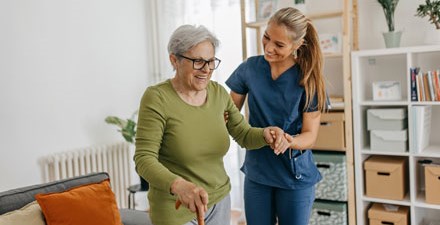

For many patients, getting to a doctor's office or physical therapy clinic is a challenge that can too often prevent them from getting the care they need. Home health physical therapy removes that barrier, bringing expert care directly into the home to support safer, faster healing.
Quick Takeaways
Home health physical therapy can help you:
- Receive physical therapy without leaving your home
- Improve your strength, balance, and mobility in your everyday environment
- Learn practical strategies to stay safe and maintain independence
- Reduce your risk of being readmitted to the hospital
- Ask your physician if home health physical therapy is appropriate for you
What Is Home Health Physical Therapy?
Home health physical therapy is treatment provided by a licensed physical therapist in your home. Instead of traveling to a clinic, you receive treatment where you live and do everyday activities.
This approach is commonly used after surgery, a hospital stay, illness, or significant injury. It can also benefit people with chronic conditions or mobility limitations that make leaving home difficult.
Why Care At Home Matters
Working in your home allows a physical therapist to see your environment and real-world challenges. With this insight, they can tailor care according to your unique situation. They can help you:
- Move safely throughout your space
- Navigate stairs or tight areas
- Get in and out of bed or chairs more easily
- Identify hazards in the home and recommend simple safety changes
Improve Strength, Mobility, and Independence
After illness or inactivity, it is common to lose strength and endurance. A physical therapist designs a personalized program to help you rebuild function and return to daily activities.
Your treatment may include:
- Strategies to help you move safely, comfortably, and confidently
- Strength and flexibility exercises
- Balance and walking practice
- Endurance training
- Exercises designed to help you function at home and to address your goals
- Ongoing maintenance visits (when insurance allows) to preserve strength, mobility, and function once you’ve met your initial recovery goals
For example, if carrying groceries or walking to your mailbox has become difficult, your physical therapist will work with you to improve leg strength, balance, and walking endurance to help make those activities easier.
Most exercises require little equipment and can often be done using items already in your home.
Reduce Your Risk of Falls
Falls are a major concern for many older adults and people recovering from injury or illness.
A home health physical therapist will evaluate your balance, walking ability, and home setup. They will assess your space, identify any hazards, and recommend simple changes such as:
- Removing tripping hazards
- Improving lighting
- Rearranging furniture for safer movement
- Adding grab bars in the bathroom
Treatment often focuses on balance training, safe transfers, and walking skills to help prevent future falls.
Practice Real-Life Activities Where They Happen
Home-based physical therapy focuses on tasks you do every day, such as:
- Getting in and out of bed
- Standing from a chair
- Using the bathroom safely
- Climbing stairs
- Walking indoors and outdoors
Practicing these movements at home builds confidence and improves safety where you spend the majority of your time.
Learn to Use Mobility Equipment Safely
If you use a cane or walker, or other assistive device, your physical therapist will ensure it fits properly and teach you how to use it safely. They can help you:
- Walk with better posture and balance
- Move safely on different surfaces
- Reduce stress on healing joints or muscles
Proper use of mobility equipment can help you stay active while lowering your risk of injury.
Support for Caregivers
Physical therapists also guide caregivers on how to assist you safely and effectively. This may include helping them:
- Assist safely with transfers, such as getting in and out of bed
- Support walking and exercise routines
- Recognize when additional care may be needed
This support can improve safety, increase confidence, and reduce caregiver stress.
What to Expect at Your First Home Physical Therapy Visit
Your first home health physical therapy visit will include a thorough evaluation of your health history, mobility, and goals. Your physical therapist will assess your strength, balance, and movement and develop a personalized treatment plan.
As you improve, your physical therapist will adjust your plan to support your recovery and independence.
Why It Matters
Research suggests that early home-based physical therapy may reduce the risk of hospital readmission within 30 days by addressing mobility and safety concerns sooner. Early physical therapy also supports independence, improves function, and helps you stay active in daily life.
Physical therapists are movement experts. They help people reduce pain, move better, and stay active through hands-on care, education, and exercises tailored to their needs. They also work with people to prevent injury and support long-term health and performance.
Getting Started
Talk with your physician or a physical therapist to see whether physical therapy at home is right for you.
In many cases, you'll need a doctor's order to get home health physical therapy, and your insurance plan may require one. Your condition and situation — including whether you are homebound or not — can dictate the need for a referral. Rules can also vary by state and health plans (including Medicare), so it is best to contact a physical therapy clinic that offers home visits or a home health agency directly to find out what's needed and how to get started with physical therapy at home. To find a physical therapist in your area, visit Find a PT.
Additional Resources
- Maintaining Health and Fitness: Tips and Exercises for Older Adults
- 6 Exercises to Promote Balance That You Can Do at Home
- Physical Therapy Guide to Balance Problems
- Health Center on Falls Awareness and Prevention
- MedlinePlus: Home Health Services
- CDC: Prevent Falls and Fractures